Gen Z Is Right: Work Is Too Complicated Now
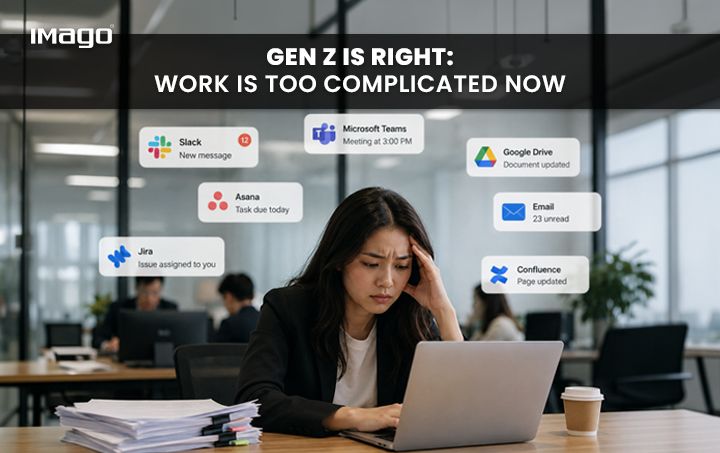
There’s a growing joke online that Gen Z “can’t handle work.”
But if you actually look at how work is set up today, the more accurate take might be: work is unnecessarily complicated. Over-engineered systems, fragmented communication, and an overload of tools have transformed the workplace into a labyrinth. And Gen Z is the first generation boldly calling this out, challenging the status quo with clarity and courage.
Gen Z’s Perspective: Challenging Outdated Work Practices
Gen Z workers are not refusing to work—they’re rejecting workflow chaos.
They challenge:
-Over-complicated, bureaucratic processes
-Multi-step approvals for simple tasks
-Endless app-switching that disrupts flow
-The confusing culture of “check this system, not that system”
Growing up in an instant-access digital world, they expect work tools to be just as seamless and efficient. When work feels slow, scattered, and repetitive, they don’t accept it—they see it as a problem to be solved.
This mindset reflects a broader shift toward valuing clarity, efficiency, and mental well-being in the workplace.
Work Didn’t Get Harder. It Got Messier.
We Added Tools… and Made Everything Worse
Every tool was supposed to help.
“This will improve communication.”
“This will organize tasks.”
“This will streamline collaboration.”
And to be fair, each one does something well.
But together?
It’s like having 5 remote controls for one TV.
You can use them… but why is it this complicated?
Gen Z Looked at This and Said “No Thanks”
Here’s the thing.
Gen Z didn’t grow up with this level of mess.
They’re used to:
- apps that just work
- systems that make sense
- information that’s instant
So when they enter the workplace and see:
- five tools for one task
- approvals that take longer than the work itself
- constant “check here, not there” instructions
Their reaction isn’t:
“Okay, this is normal.”
It’s:
“Why is this so complicated?”
And honestly… fair.
The Cost of Overcomplication
Complex systems don’t fail loudly. They fail quietly.
They show up as:
delayed decisions, duplicated work, missed updates, and teams that feel constantly busy but not fully effective.
Over time, this creates a gap between effort and output.
People are working, but not progressing at the speed they should be.
And perhaps most critically, it creates cognitive fatigue.
Not because the work is too demanding, but because the path to completing it is unclear.
The Strategic Advantage of Simplified Work
Organizations that successfully streamline their work environments stand to gain a significant competitive advantage. Simplified workflows enable faster decision-making, enhance innovation capacity, and boost employee engagement. These benefits translate into improved operational performance and a stronger market position.
In addition, companies that respond proactively to Gen Z’s call for simplicity demonstrate adaptability and a commitment to contemporary workforce expectations
Conclusion
Gen Z’s call to simplify work is more than a generational complaint—it’s a strategic insight. Work has become too complicated, and the solution is not more effort or more tools, but better-designed systems that reduce friction and enhance clarity.
Businesses that embrace this shift will not only improve productivity and employee well-being but will position themselves for sustainable success in a rapidly changing world.
If you’d like to explore tools and solutions that can improve your business productivity, visit IMAGO Technologies to learn more.