Education Tablet vs. Regular Tablet: What’s the Difference
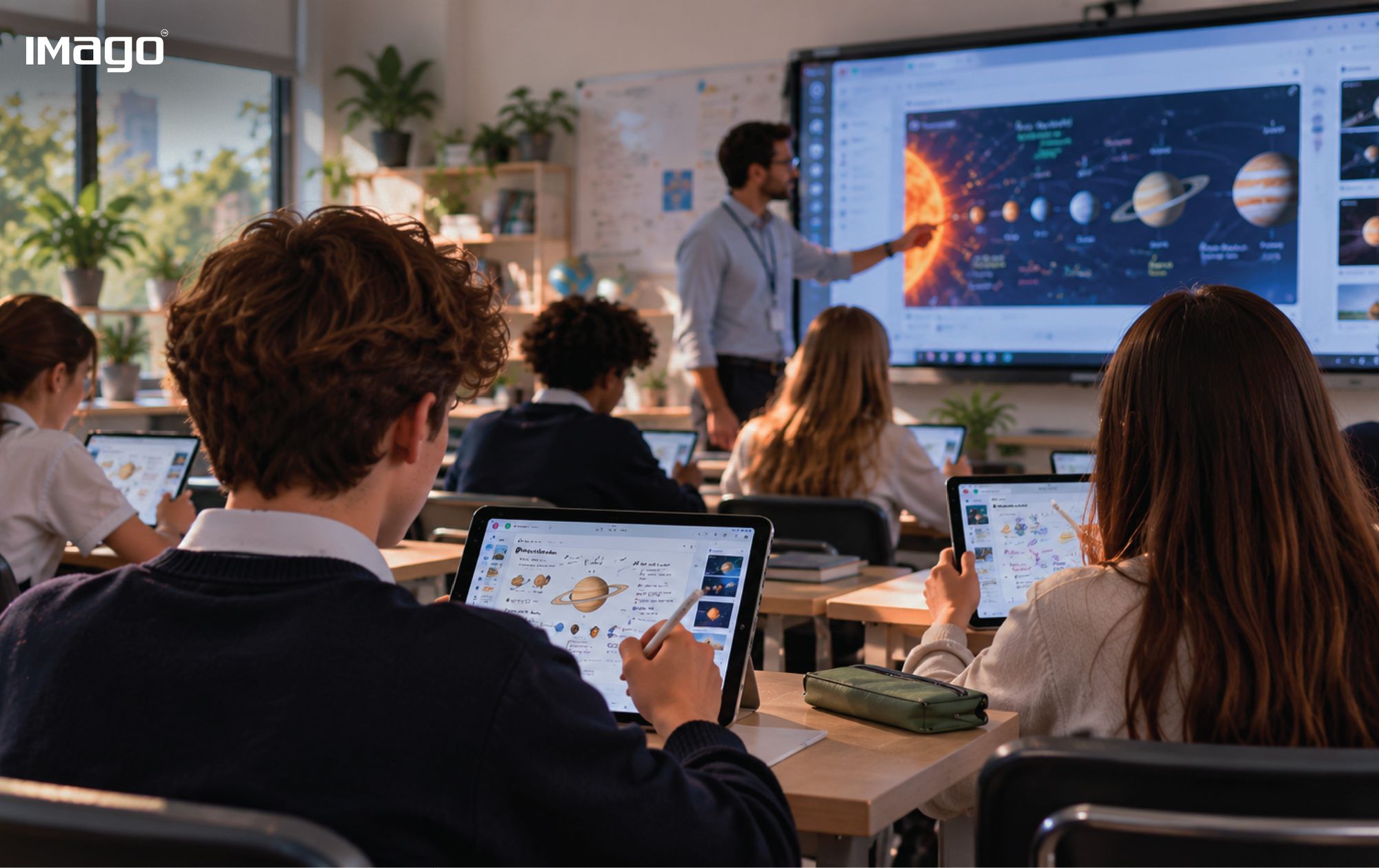
Walk into any modern classroom, and you will see a sea of glowing screens. But behind those screens lies a massive, expensive mistake that millions of parents and schools make every year: they assume that a tablet is just a tablet.
They head to the store, pick up a standard, consumer-grade entertainment tablet, hand it to a student, and expect academic miracles. Instead, they get a distracted child, a cracked screen within two weeks, and a device that ends up being used for mobile gaming rather than geometry.
When it comes to the battle of the education tablet vs regular tablet, the differences are not just skin-deep—they can make or break a student's academic success and a teacher's classroom management. Here is everything you need to know to choose the right tech.
The Core Difference: Entertainment vs. Engagement
At the most basic level, a regular tablet is engineered to make you consume media. It features vibrant, glossy screens optimized for movies, fast processors for mobile gaming, and a relentless stream of notifications designed to keep you hooked.
Conversely, an education tablet is built to help students produce and learn. Every design choice—from the software interface to the physical glass—is tuned to minimize eye strain, block out digital distractions, empower teachers, and withstand the brutal reality of a school backpack.
Direct Comparison: Side-by-Side Overview
| Feature | Education Tablet | Regular Tablet |
|---|---|---|
| Primary Design Goal | Focused study, note-taking, and literacy | Media consumption, gaming, and social media |
| Display Technology | Low-glare, eye-comfort, or dual-mode paper-like screens | Ultra-glossy, high-refresh-rate OLED/LCD screens |
| Battery Philosophy | Power-sipping, optimized for 10+ school hours | High power drain from background apps and graphics |
| Durability | Built for school-wide deployment and rugged use | Sleek, thin, fragile glass easily shattered without a heavy case |
| Parental/School Control | Deep MDM integration, restricted app stores, locked focus modes | Open app ecosystems, harder to restrict background alerts |
The 5 Hidden Factors That Separate the Two
1. The Battle Against Eye Strain (E-Paper/Dual-Mode vs. Glossy OLED)
Regular tablets use bright, blue-light-emitting LCD or OLED screens. While beautiful for watching films, staring at them for six hours a day causes intense digital eye strain, dry eyes, and disrupted sleep cycles.
True education tablets frequently utilize specialized display tech, such as dual-mode displays. These allow students to switch instantly to a paper-like, low-glare viewing experience. This eliminates glare even under bright classroom lights and keeps a student’s eyes fresh during extended reading sessions.
2. The Distraction-Free Ecosystem & Classroom Control
Give a student a regular tablet, and they are one swipe away from YouTube, TikTok, and game alerts. For a teacher trying to manage a room of 30 students, this is a nightmare.
Education-first tablets are built to run on managed ecosystems. Through Mobile Device Management (MDM), school IT teams can completely lock down the operating system. This allows access only to approved tools like Google Classroom, Canvas, or specific learning software, transforming the hardware into a dedicated learning station instead of a distraction engine.
3. Note-Taking Fluidity and Stylus Integration
On a standard tablet, writing with a stylus often feels like sliding a plastic pen across a sheet of glass. It is slippery, unnatural, and leads to poor handwriting.
Education tablets prioritize the tactile feel of learning. The screens are manufactured with a microscopic texture that creates friction, giving the exact sensation of a pen writing on paper. This tactile feedback is crucial for cognitive retention when sketching diagrams or solving equations.
4. Built for the Backpack, Not the Couch
Regular tablets prioritize aesthetics—they are thin, light, and sleek. Drop one on a concrete school floor, and it is instantly ruined.
Education tablets are designed for the chaotic life of a student. They feature reinforced corners, shatter-resistant glass, and spill-resistant designs because accidents in a chemistry lab or cafeteria are bound to happen.
5. AI and Ecosystem Integration for Teachers & Students
A regular tablet treats learning tools as standalone apps you have to download. True educational tablets weave learning directly into the device's DNA. They include features built specifically for the classroom ecosystem—such as real-time audio transcription and translation for multilingual classrooms, and deep integration that links teachers, students, and IT administrators together.
The 2026 Spotlight Recommendation: IMAGO PaperSmart Tablet
If you are looking for a device that perfectly embodies what an education tablet should be, the IMAGO PaperSmart Tablet is a prime example of modern classroom tech. Built specifically around the way education environments function, it closes the gap between standard entertainment tech and functional learning.
- Dual-Mode Flexibility: It lets students instantly switch between a Black & White Mode for focused, distraction-free reading and a Colour Mode for engaging visual learning and classroom presentations.
- Built-in EdPrep AI Platform: Unlike a regular tablet, it features a native AI-powered learning environment designed for major exams (including IGCSE, SPM, IELTS, SAT, and more). It acts as a personal tutor that remembers a student's individual progress, strengths, and weaknesses.
- Teacher & IT Friendly: It comes ready for school-wide deployment, allowing IT teams to easily secure, monitor, and manage the devices remotely using tools like IMAGO Proctor. Teachers can also instantly generate curriculum-aligned templates, interactive graphics, and quizzes directly on an interactive canvas.
Final Thoughts: Making the Smart Investment in Learning
Choosing between an education tablet and a regular tablet ultimately comes down to purpose. If your primary goal is media consumption, gaming, or high-end creative design, a standard consumer tablet fits the bill. However, if the objective is true academic advancement, classroom engagement, and long-term eye protection, a dedicated education tablet is the clear winner.
Investing in purpose-built classroom tech like the IMAGO PaperSmart tablet means you aren't just buying a piece of glass; you are deploying a focused, AI-driven learning ecosystem. By removing the endless loop of digital distractions and replacing them with robust teacher controls and personal AI tutoring, you give students the exact environment they need to succeed in the modern digital age. Don't let entertainment hardware stand in the way of education—choose tech designed to help students learn, not just consume.
PAPERSMART TABLET
Discover IMAGO PaperSmart tablet, an education-focused tablet designed to bring paper-like experiences, digital learning, AI, and collaboration together in one device.
Register your interest to receive product information and access exclusive offers now: https://imago.us/paper-smart-tablet/