The Emotional Toll of Lost Notes and Scattered Resources
For many professionals and educators, productivity challenges are often framed as time management or tool limitations. Few things create more frustration than knowing important information exists somewhere but being unable to find it when it matters.
Lost notes and scattered resources don’t just slow work down. They quietly drain focus, confidence, and mental energy.
When Information Is Everywhere, But Nowhere at Once
Modern work relies on multiple tools. Notes may live in one app, documents in another, tasks in a third, and reference materials somewhere else entirely. Over time, this fragmentation creates a familiar experience:
- Rewriting content because the original can’t be found
- Searching across folders, emails, and platforms during meetings or classes
- Losing confidence in one’s own organizational system
The Hidden Emotional Impact
The emotional toll of scattered resources is rarely discussed, but it is significant:
- Stress and anxiety when deadlines approach and information is missing
- Decision fatigue from repeatedly choosing where to store or search for content
- Reduced confidence when ideas feel disorganized or incomplete
- Creative disruption when momentum is lost mid-task
For teachers, this can affect lesson flow and classroom confidence. For knowledge workers, its often results in duplicated effort and unnecessary mental load.
Why This Problem Persists
The issue is not a lack of effort or discipline. It is structural.
Most productivity tools are designed for single functions: documents, whiteboards, databases, or task lists, rather than for how people actually think and work. As a result, users are forced to build their own systems across multiple platforms, often without a clear way to connect information meaningfully.
Over time, this leads to fragmentation rather than clarity.
Rebuilding Trust in Your Own Knowledge
What people really need is not more tools, but a single place where ideas stay connected.
When notes, documents, tasks, visuals, and references exist within one unified environment:
- Information becomes easier to retrieve
- Context is preserved
- Mental load is reduced
- Confidence in one’s workflow returns
This shift is less about efficiency and more about emotional relief—knowing that your work is organized, accessible, and reliable.
How Collab Addresses the Problem
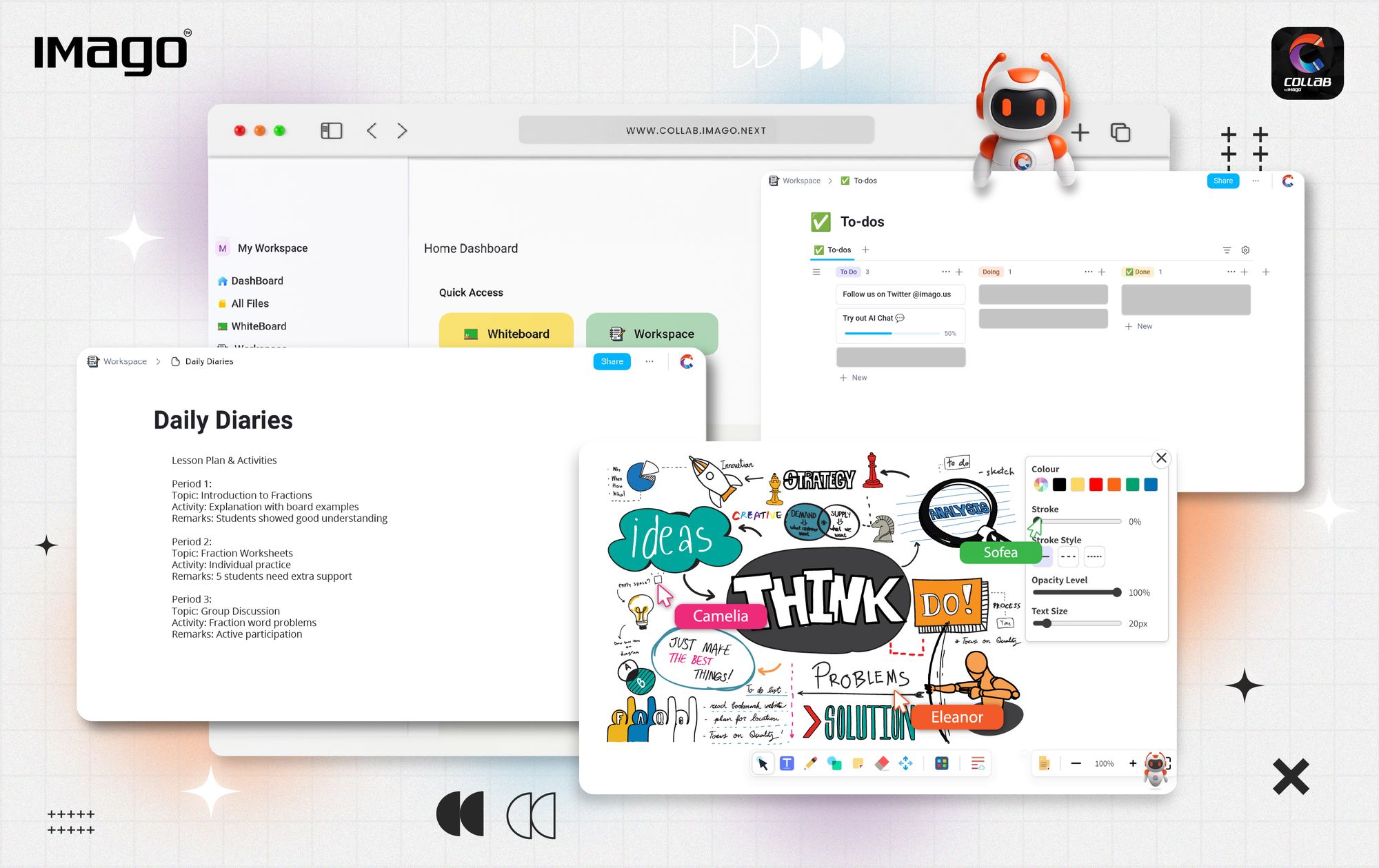
Collab is designed as a hyper-fused workspace, where notes, documents, boards, and structured data live together in one continuous canvas. Instead of separating information by tool, Collab allows users to organize knowledge by thought, project, or outcome.
With built-in journals, wikis, task lists, and visual boards that interlink naturally, ideas no longer disappear into isolated apps. Everything stays connected, searchable, and in context.
This reduces the emotional stress that comes from scattered resources and restores a sense of control over one’s work.
Why This Matters More Than Productivity
Productivity is often measured in output, but sustainable work depends on mental clarity. When people trust their system, they work more calmly, creatively, and confidently. An All-in-one workspace like Collab helps restore that peace by ensuring ideas stay where they belong—together, organized, and ready when needed.